Two developers at a pine workbench reviewing a running grey-box game level on a monitor under cool north window light

Nordic Bridge Solutions · Game development, Belgium

We build the game, then hand you the keys.

Game development services, from slice to shelf

Four overlapping lanes in one studio: original indie titles, co-development blocks for other teams, simulation and serious games, and VR/XR. Each lane carries different constraints — and the honest answer to "can you build this" depends on which one your project sits in.

A designer's hands at a pine desk with a running grey-box build on a monitor at frame right
Prototype stage — the loop has to answer a question before it earns more work

Production lanes · the four we run

Four lanes, one bench

We build games across four overlapping lanes: original indie titles, co-development blocks for other studios, simulation and serious games, and VR/XR. Each lane sits on different hardware assumptions, different approval chains and a different definition of "done" — the seam between them is where projects usually drift, so we name it up front rather than during week twelve.

Below is how each lane actually runs: who owns the creative risk, who approves content, and what the visitor can hold in hand at the end of a milestone.

  • Original indie titles Studio carries creative risk alongside the client.
  • Co-development Capacity inside your repository and your conventions.
  • Simulation & serious games Procedural accuracy on hardware the client already owns.
  • VR / XR Comfort and framerate as constraints, not aspirations.

Production lanes

Where the load lands

Each lane below carries the same structure: what we take on, and what the studio actually ships at the end. Hover or focus a slab — its tray lifts and the tick lights at its foot.

Original titles and indie production

Indie production means the studio carries creative risk alongside the client. When we build an original title, the loop has to justify itself commercially, which changes how we prototype: we test whether a mechanic is fun before we test whether it is marketable, because a marketable game that isn't fun doesn't sell.

Scope

Original IP, prototypes, vertical slice, full production

Reference in Belgium

Humble Grove — narrative-driven, stylized, compact team

That model is the one we recognize: a small team that knows its own limits, builds a specific idea well, and takes original titles only where the core idea is already specific. "A roguelike" is not specific. "A roguelike where the map is generated from the player's own save history" is.
Co-development for other studios

Co-development is production capacity with a shared pipeline. A studio brings us in to own a system, a content block, or a platform version, and we work inside their repository and their conventions rather than imposing ours.

Engagement start

A written interface document before week one

Documented

System boundaries, naming, merge cadence, approvals

The failure mode here is coordination, not skill. Two teams with different ideas about branch hygiene will generate more merge conflicts than either would generate alone — which is why the interface document exists. Fishing Cactus in Mons built a business on this hybrid model, mixing service work with its own titles; it is a durable structure for a mid-sized team, and it is the one we run.

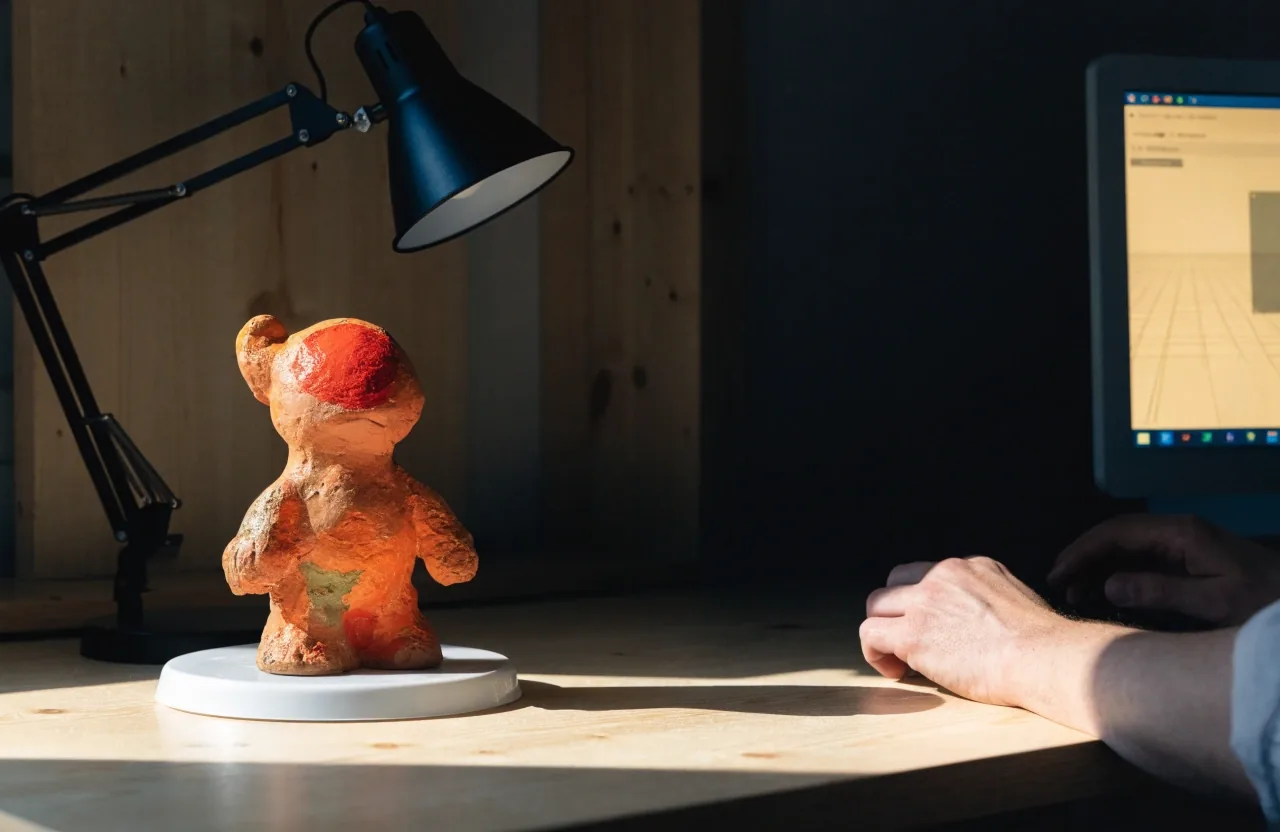
A clay sculpt of a stylized game character on a rotating stand under a directional lamp

Simulation and serious games

Simulation work is where games and training software meet. The client isn't buying entertainment, they're buying procedural accuracy, and the software usually has to run on hardware they already own. LuGus Studios in Genk is the clearest Belgian example of a studio built around this.

The design priorities are different from a commercial game: onboarding has to be near-invisible, failure states have to teach rather than punish, and the trainee's performance often has to be logged and exportable. Hunting Simulator 3, produced by Nacon Studio Ghent and covered in Belgian industry coverage in October 2026, shows the other end of the lane — commercial simulation built for a consumer audience. Both are viable and they need different production instincts.

VR and XR development

VR is a technical discipline before it's a creative one. Comfort, framerate, and interaction design are hard constraints, and visual ambition has to fit inside them. A frame dropped in a headset breaks presence in a way it never does on a monitor.

Belgian benchmark

Cyborn, Antwerp — Hubris, a VR action-adventure

We also say

When a flat-screen build with headset support serves better

We take on VR and XR work where the interaction model is either settled or where the client wants help settling it, and we'll say when a project would work better as a flat-screen build with optional headset support. That's a scoping decision, not a consolation prize.

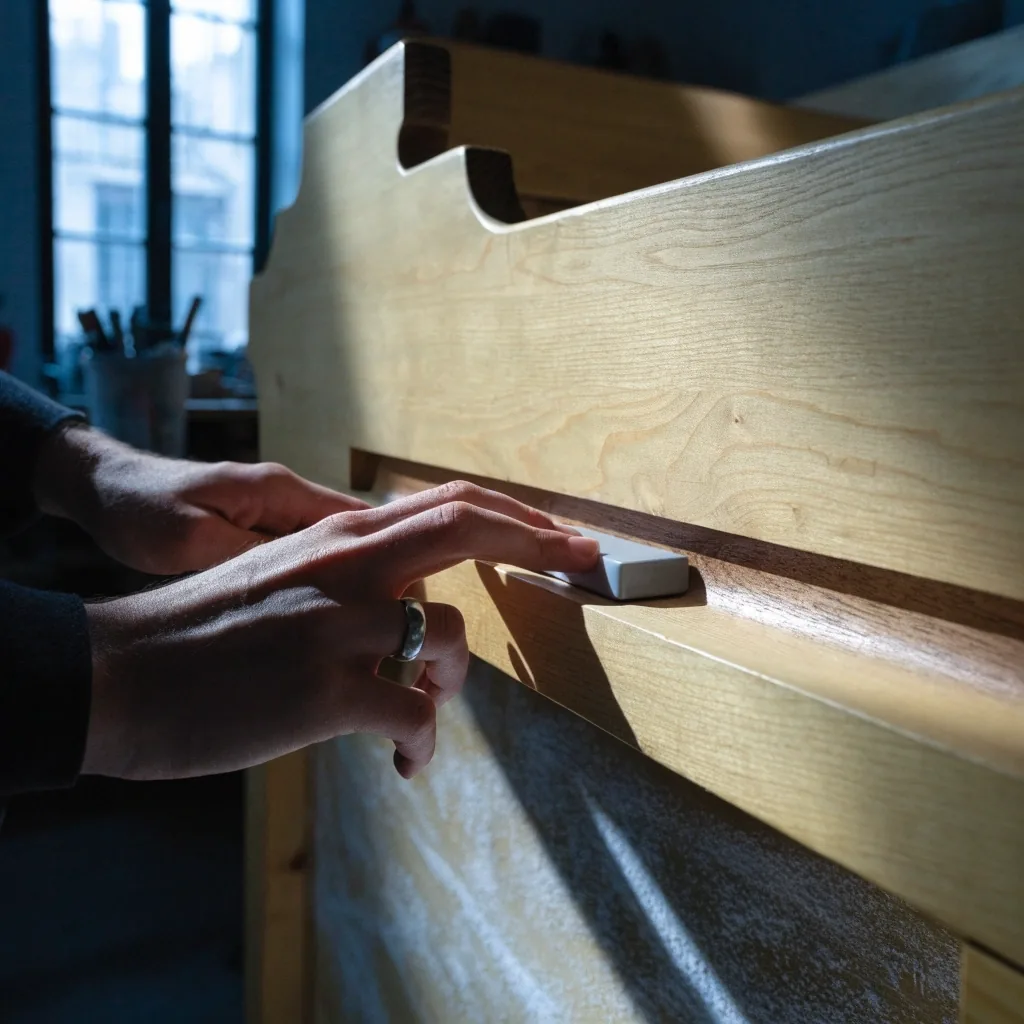
Matte aluminium hardware grille photographed in profile on a pine workshop shelf

Cross-platform planning

Cross-platform is a scoping decision. Input differences, resolution and aspect ratio handling, save-system portability, and platform certification requirements all need to be understood before content production starts, not after.

The common mistake is treating a port as a translation task. It isn't. A control scheme designed for a mouse can be unusable on a gamepad, and a UI designed for a 16:9 monitor can break entirely on a handheld screen. We flag these during scoping and price them into the schedule. If a platform version is added later, it costs more, and we say that upfront.

Pale lacquered pine bench edge with a routed measurement notch under raking light

How a game engagement runs

Four stages, and none of them is a status report.

Each stage ends with something you can open and run — a slab you can hold in hand and press a button on. The four stages are scoping, prototype, production, and release preparation; the weight moves down the bench and lands somewhere concrete at each terminal point.

  1. Scoping

    A written brief and a rough schedule you can circulate.

  2. Prototype

    A playable slice that answers whether the core loop works.

  3. Production

    Milestone builds with changelogs on a fixed cadence.

  4. Release preparation

    Platform submission, store assets, and the build that goes out.

The full breakdown sits on the production process page.

The load path, left to right

Five frames from a working week

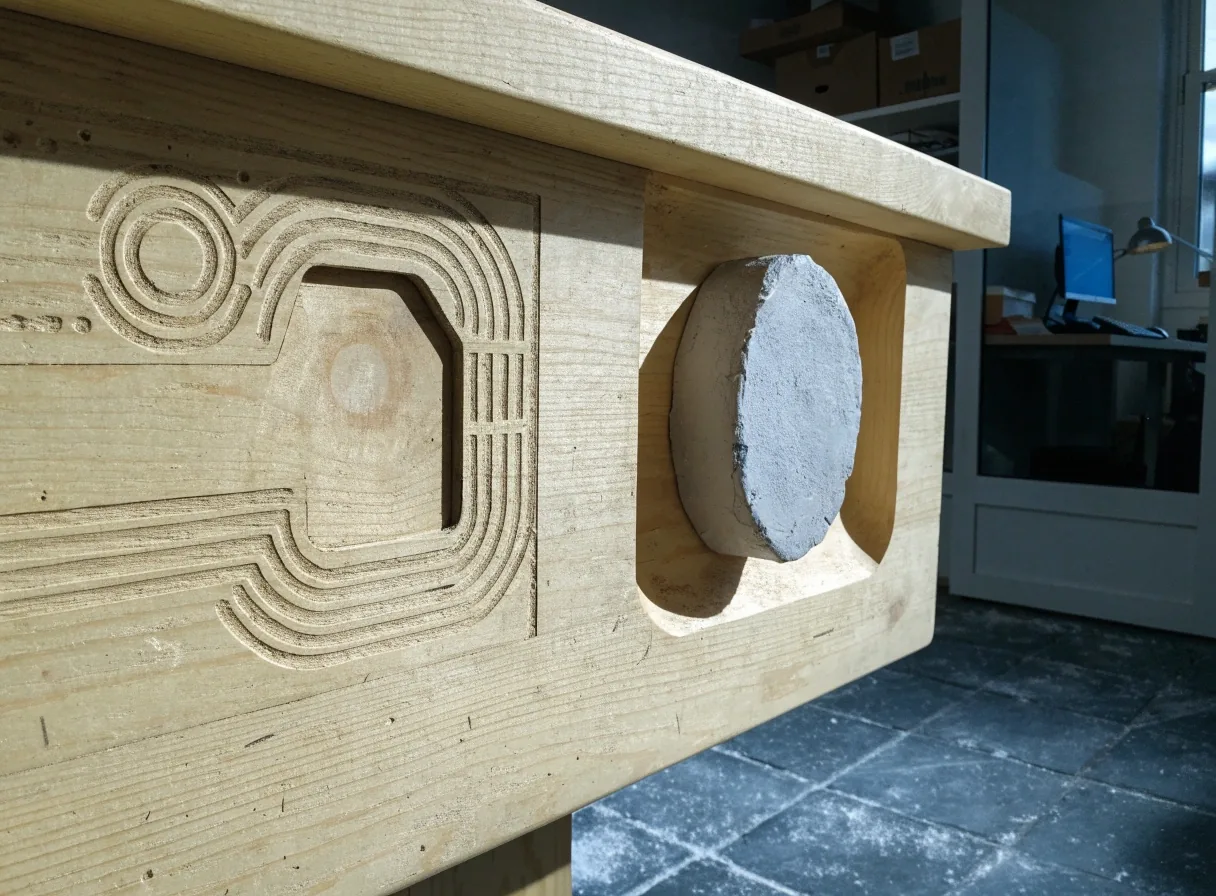
The stages above run on real matter: pine worktops, clay, keyboards, headsets, and chalked slate. Scroll down and the strip travels — each frame is a different bench, and each carries its own terminal mark. Nothing staged, nothing drawn.

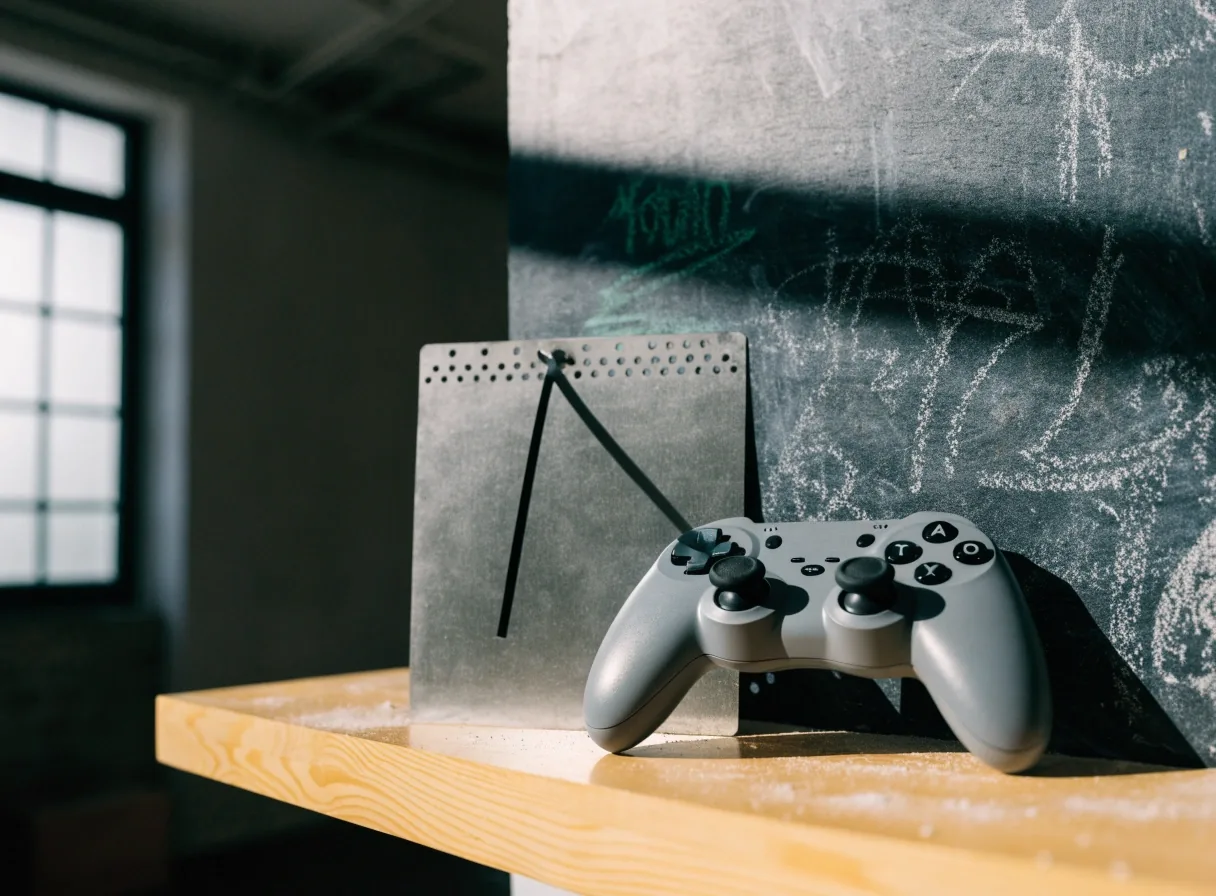
Slate milled face in raking light with its top chamfer catching the window
Stage 1 Scoping
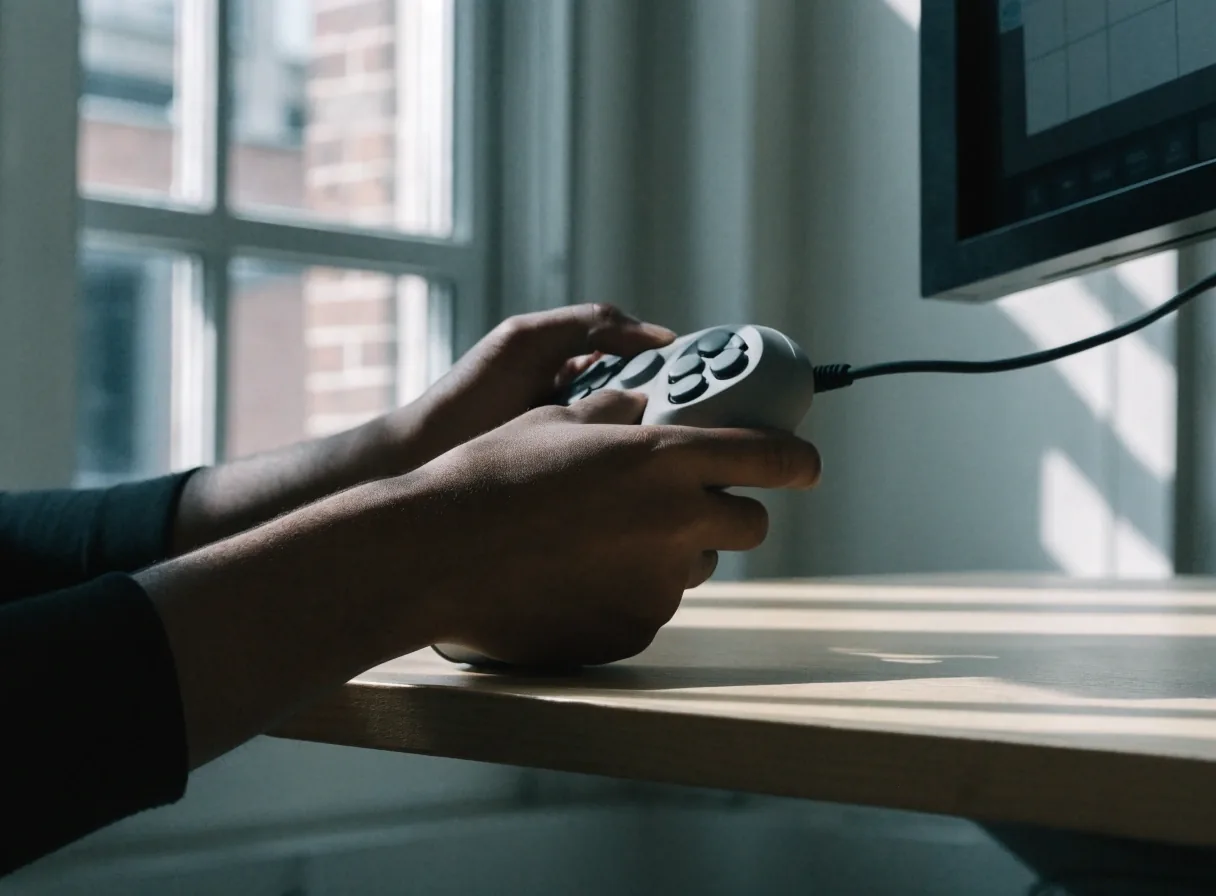
A grey-box game level running on a monitor with a keyboard under warm light
Stage 2 Prototype
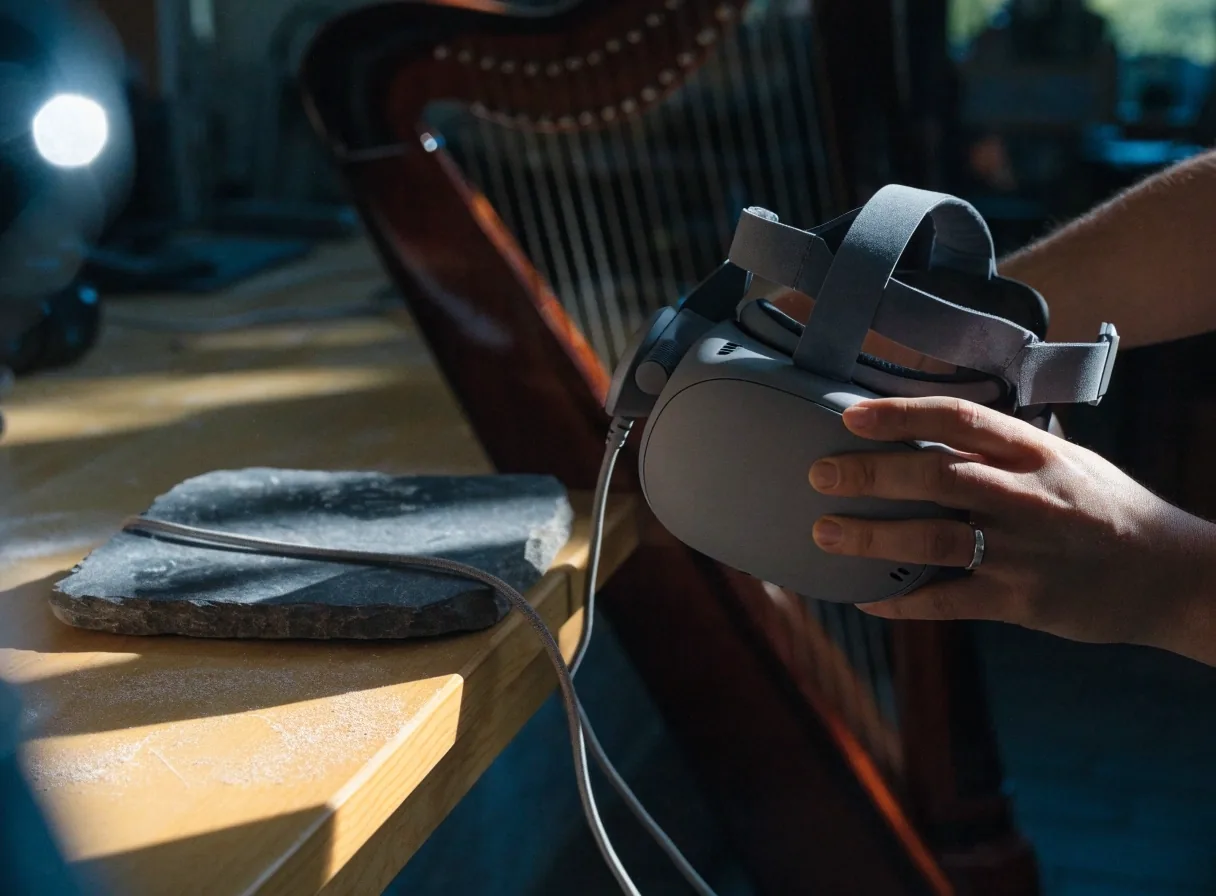
A VR headset on a pine tabletop with a braided cable strap beside it
Stage 3 Production
A hand-sketched chalk curve on slate under raking light
Stage 4 Release prep
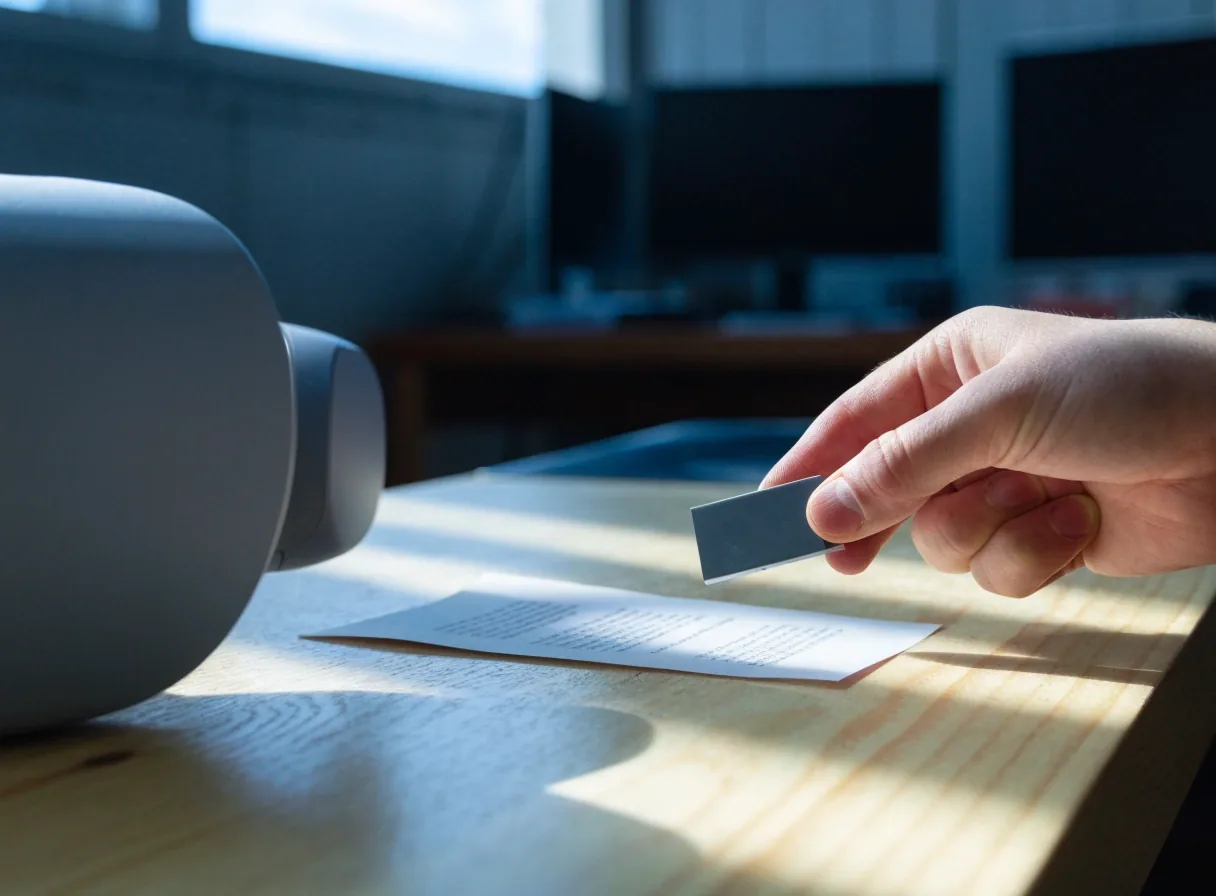
A USB drive in a plain paper sleeve on a slate desk under cool window light
Terminal Handover

Where a Belgian team fits

A scene spread across the country

Belgium's game output is export-oriented. The domestic market is too small to sustain a studio on its own, so most teams here sell into international publishers or international clients, and English is the working language by default. That means a Belgian studio is usually comfortable with the documentation and communication overhead that international projects require.

Read more of the regional picture on the Belgian landscape page.

Humble Grove

Narrative-driven, stylized indie production

Belgium

Fishing Cactus

Hybrid service work mixed with own titles

Mons

LuGus Studios

Simulation and serious-game production

Genk

Cyborn

VR action-adventure production (Hubris)

Antwerp

Nacon Studio Ghent

Commercial simulation (Hunting Simulator 3)

Ghent

The teams above are listed as a regional picture — public studios whose work near an engagement our own cases are not. Cities named are their own.

Judging fit before you talk to us

A short checklist, then a useful answer

Do you know what problem the game solves or what it's for? Do you have a platform target, even a provisional one? Do you have a rough budget range, or a deadline that isn't negotiable? Is the core mechanic described in a sentence? If most of those are yes, we can probably give you a useful answer quickly. If most are no, that's fine too — the first conversation will be about narrowing the idea rather than scheduling production.

Questions we get asked first

Console, mid-project takeovers, prototypes

Do you work on console as well as PC?

It depends on the project and on platform access. Console versions require devkit access that has to be arranged, and certification has its own timeline. We treat console as a scoping decision, not a late addition.

Can you take over an unfinished game?

Sometimes. It depends on the state of the codebase and whether the original team's conventions are documented. We usually ask for a short paid technical review before committing.

Do you build prototypes without a full production commitment?

Yes. A standalone prototype stage with a defined question to answer is a normal way to start. If the prototype says the idea doesn't work, that's a useful result and the project stops there.

Do you handle publishing or marketing?

No. We build the game. Publishing, funding, and marketing are separate arrangements, and we'll say so clearly rather than implying otherwise.

Still unsure which lane fits? Send us your project brief and we'll route it to the right one.